

Fidan Property Blog
What Happens After the Project Is Delivered?
When purchasing a property in a residential development, it is important to understand the distinction between the handover of the project and its ongoing operation after delivery.
The construction company or developer may be responsible for constructing and handing over the swimming pool, landscaping, sports facilities, security infrastructure, and other common areas specified in the project.
Once the project has been delivered, however, the daily operation and maintenance of these facilities are generally organized by the site management.
These services commonly include:
- 24/7 security services
- Cleaning of common areas
- Swimming pool operation and maintenance
- Landscaping and garden maintenance
- Technical maintenance
- Elevator operation and maintenance
- Electricity costs for common areas
- Reception and other shared services
These services are generally financed through the common expenses and maintenance fees paid by the unit owners.
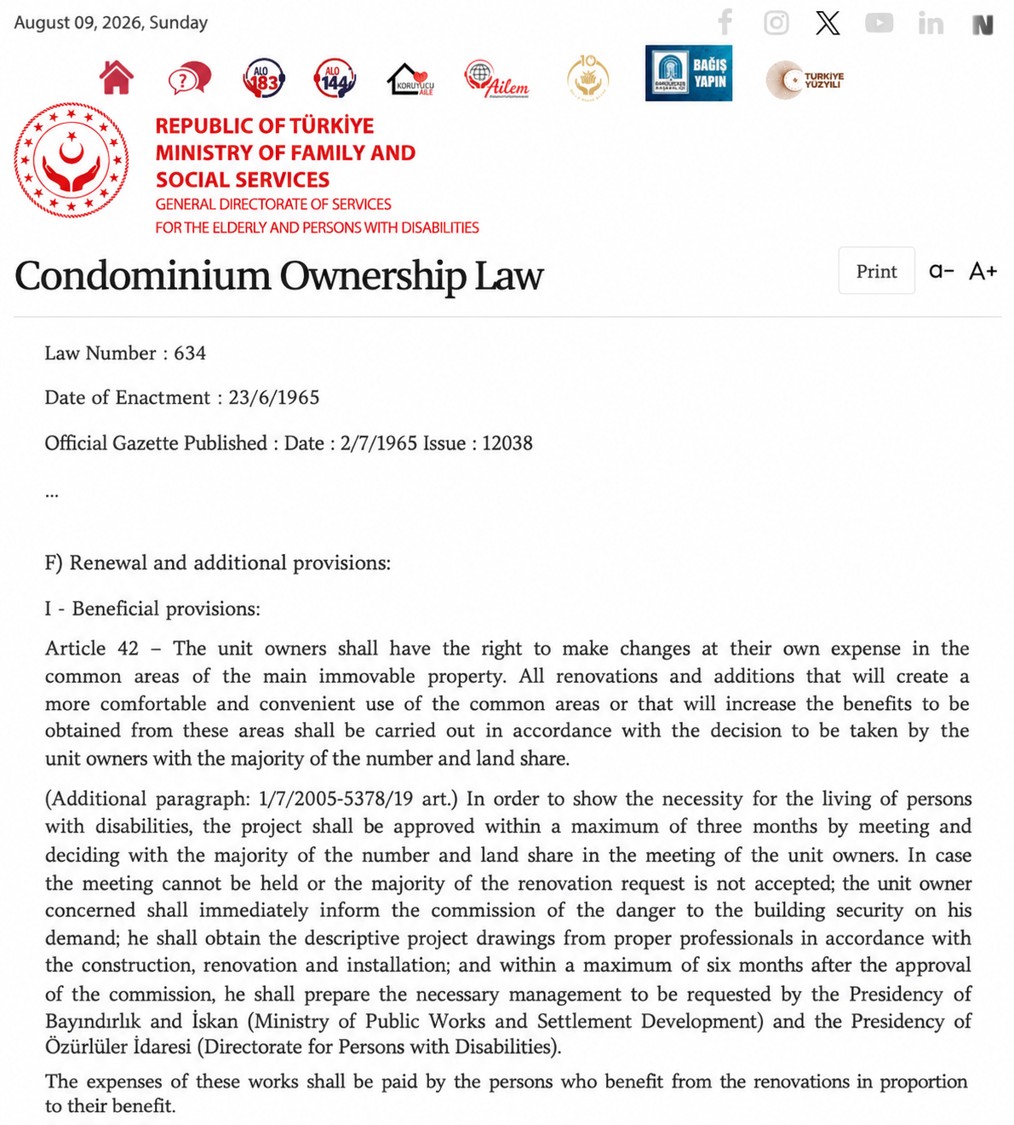
The primary legal basis governing this system in Turkey is
Condominium Law No. 634.
Who Runs the Project?
Upon completion and delivery, the residential complex may initially be managed by:
- A management company affiliated with the construction company or developer; or
- An independent professional property management company.
Subsequently, unit owners participate in the management of the complex in accordance with the Condominium Law and the Management Plan registered with the Land Registry.
Regulations Governing Site Services
Certain services organized by the management company are also subject to their own specific regulations.
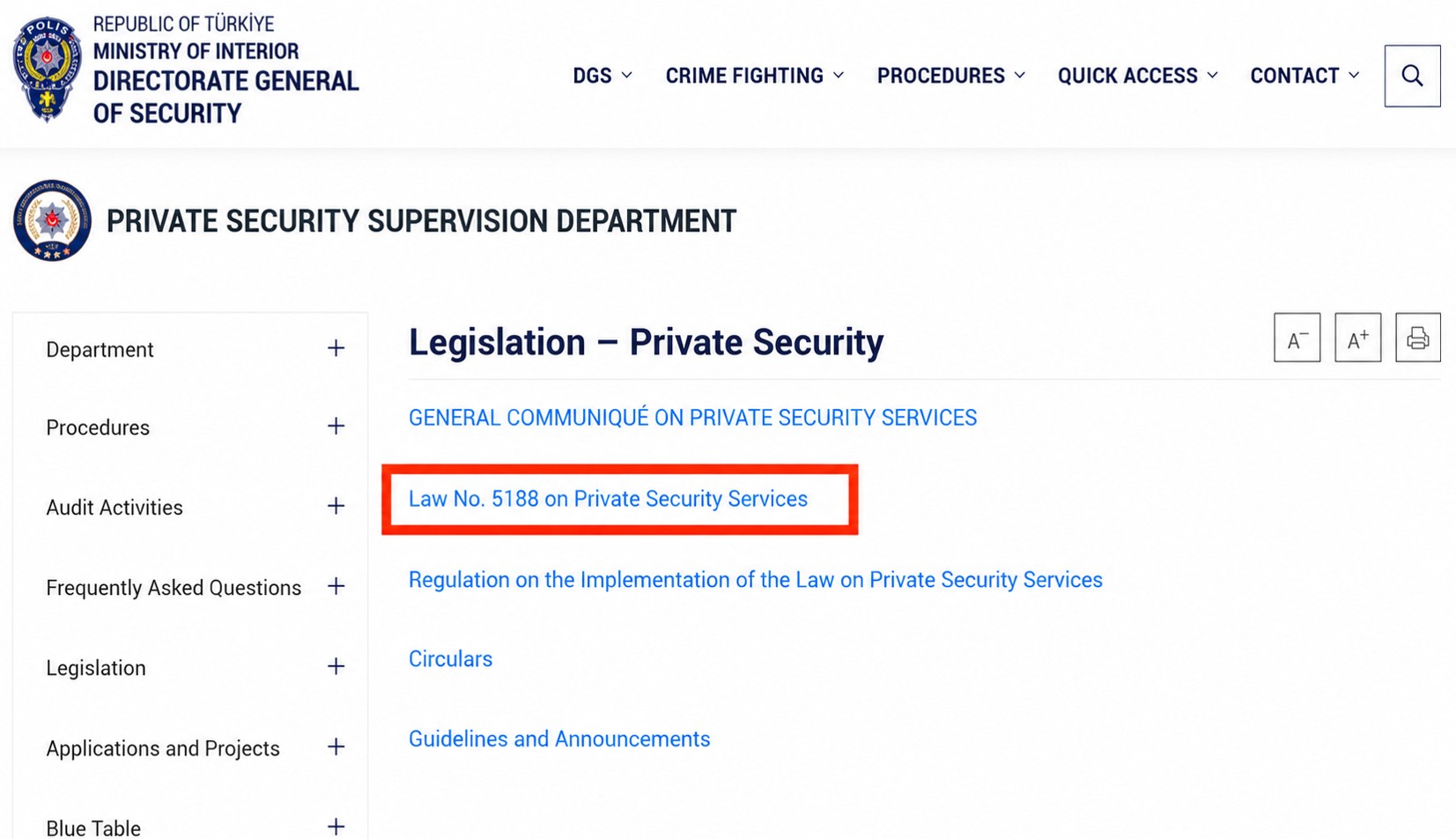
For example, private security services are provided in accordance with Law No. 5188 on Private Security Services, including the applicable licensing, professional qualification, and security training requirements.
Private security companies must obtain the required operating license from the Ministry of the Interior, while security personnel must meet the applicable legal qualifications.
If required, we can review the relevant legislation together with our
attorney and provide you with a translation prepared by a certified
translator.
Significant Changes Introduced in 2026
Law No. 7579, published in the Official Gazette on May 22, 2026, introduced important amendments to Articles 35, 37, and 70 of Condominium Law No. 634.
In particular, the voting threshold applicable to certain amendments involving the Management Plan of residential developments legally classified as collective structures was reduced.
Previous requirement
Four-fifths majority
New requirement
Two-thirds majority
Under the amended Article 70, changes to the Management Plan by the collective structure's board of representatives require the approval of members representing two-thirds of the total number of independent units. Provisions concerning temporary management may also be amended with the approval of two-thirds of the unit owners in the collective structure.
Therefore, if unit owners become dissatisfied with the current management model, expense-sharing principles, or relevant provisions of the Management Plan, the applicable amendment process may now be easier than under the previous system.
Maintenance Fees and the Operating Budget
The 2026 amendments also strengthened unit owners' involvement in the approval of community expenses.
The operating plan, which sets out the project's anticipated common expenses and required advance payments, must be submitted to and approved by the general assembly of unit owners.
If an approved operating plan is not yet available, the manager must prepare a temporary operating plan without delay. This temporary plan must then be submitted to the general assembly for approval, either in its original or amended form, within three months.
This change gives homeowners greater oversight of site management,
maintenance fees, advance payments, and the budget allocated to common
expenses.
Emlak Konut Partnership and Project Oversight
Our relevant projects, with the exception of Göktürk, include an Emlak Konut partnership. As a public-sector institution, Emlak Konut's involvement can provide an additional level of institutional supervision, financial discipline, and management oversight.
However, actual maintenance fees depend on the services provided, the approved operating plan, the size and facilities of the complex, and decisions taken by the unit owners. The applicable budget and Management Plan should therefore be reviewed separately for each project.
Official Legal Sources
- Condominium Law No. 634 This is the principal law governing condominium ownership, common areas, management duties, shared expenses, and the management of multi-unit buildings and collective structures.
- Law No. 7579 – Published May 22, 2026 This law amended Articles 35, 37, and 70 of Condominium Law No. 634, including operating-plan approval requirements and the two-thirds voting threshold applicable to specified decisions in collective structures.
- Law No. 6502 on Consumer Protection This law contains fundamental provisions concerning consumer protection, including protections applicable to prepaid residential property sales.
- Regulation on Prepaid Residential Sales This regulation governs contracts, pre-contractual disclosure, delivery, withdrawal rights, and consumer protections relating to residential properties sold before completion.
- Law No. 5188 on Private Security Services This law regulates licensing, qualifications, training, supervision, and other conditions applicable to professional private security services.
This article is provided for general informational purposes and does not constitute legal advice. The applicable Management Plan, sales agreement, operating plan, Land Registry records, and current legislation should be reviewed for each individual project.

